
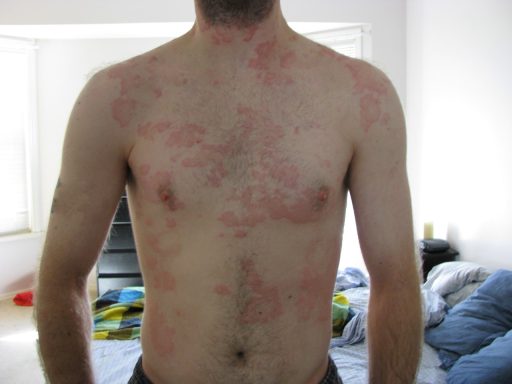
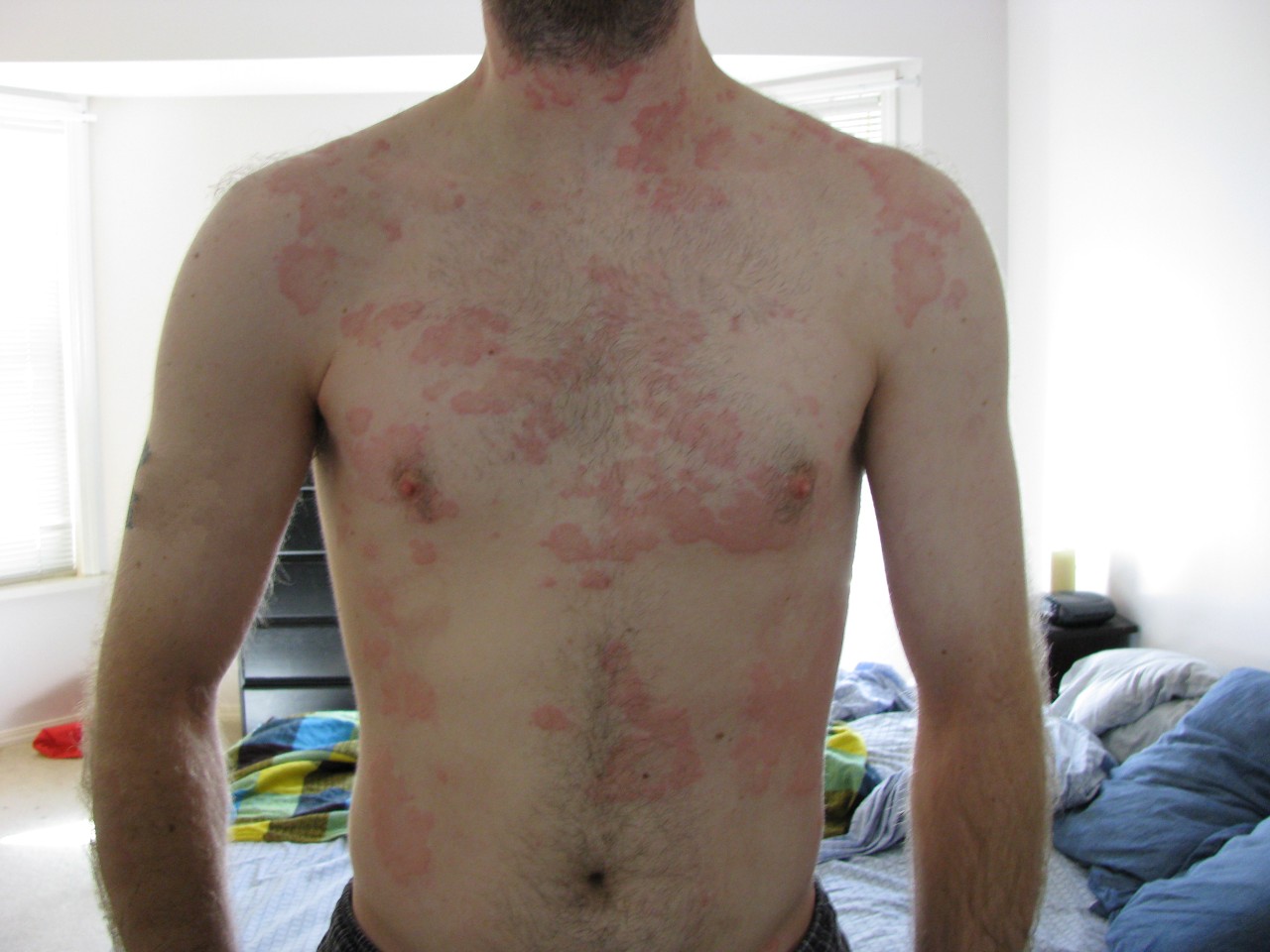
Chest Hives: Heat, Bras, Stress and Allergic Causes
The chest is a common place for stress and heat-triggered hives. Because chest symptoms can also involve breathing, it helps to know which signs need urgent care.
Common Causes of Hives on Chest
- Stress or emotional upset
- Heat, exercise or hot showers
- Bra bands and tight shirts
- Allergic reactions
- Viral infections
When Chest Symptoms Are an Emergency
Chest tightness, wheezing or shortness of breath with hives is an emergency. Hives alone do not cause chest pain. Seek care for chest pain.
Relief and Self-Care
- Wear loose breathable tops
- Cool the skin
- Practice slow breathing
- Take a non-sedating antihistamine as directed
When to Call 911
Call 911 right away if hives or swelling occur with difficulty breathing or swallowing, a tight or closing throat, a swollen tongue, lips or face, wheezing, faintness, or a sudden feeling of impending doom. Use an epinephrine auto-injector first if one has been prescribed to you, then call for emergency help.
When to See a Doctor
See a doctor if your symptoms last more than a few days, keep coming back, cover large areas, or interfere with sleep or daily life. The Hives Treatment Center, founded by Dr. Tiffany Young, is a San Francisco practice that evaluates and treats hives on the chest in person and online.
Related Reading
You may also find these guides helpful: where hives appear on the body, hives symptoms, causes of hives and how to treat hives.
Frequently Asked Questions About Hives on Chest
Why do I get hives on my chest when stressed?
Stress hormones can activate skin mast cells in some people.
Can chest hives be shingles?
Shingles is usually painful, one-sided and blistering.
Can chest hives be an allergic reaction?
Yes, especially if they appear with other symptoms.
Get Relief for Your Hives
Hives in this area are usually treatable once the trigger or pattern is identified. Visit our hives treatment page to see the latest treatment options for your outbreak.
This information is for educational purposes only and is not a substitute for professional medical advice, diagnosis or treatment. If you think you are having a medical emergency, call 911.